
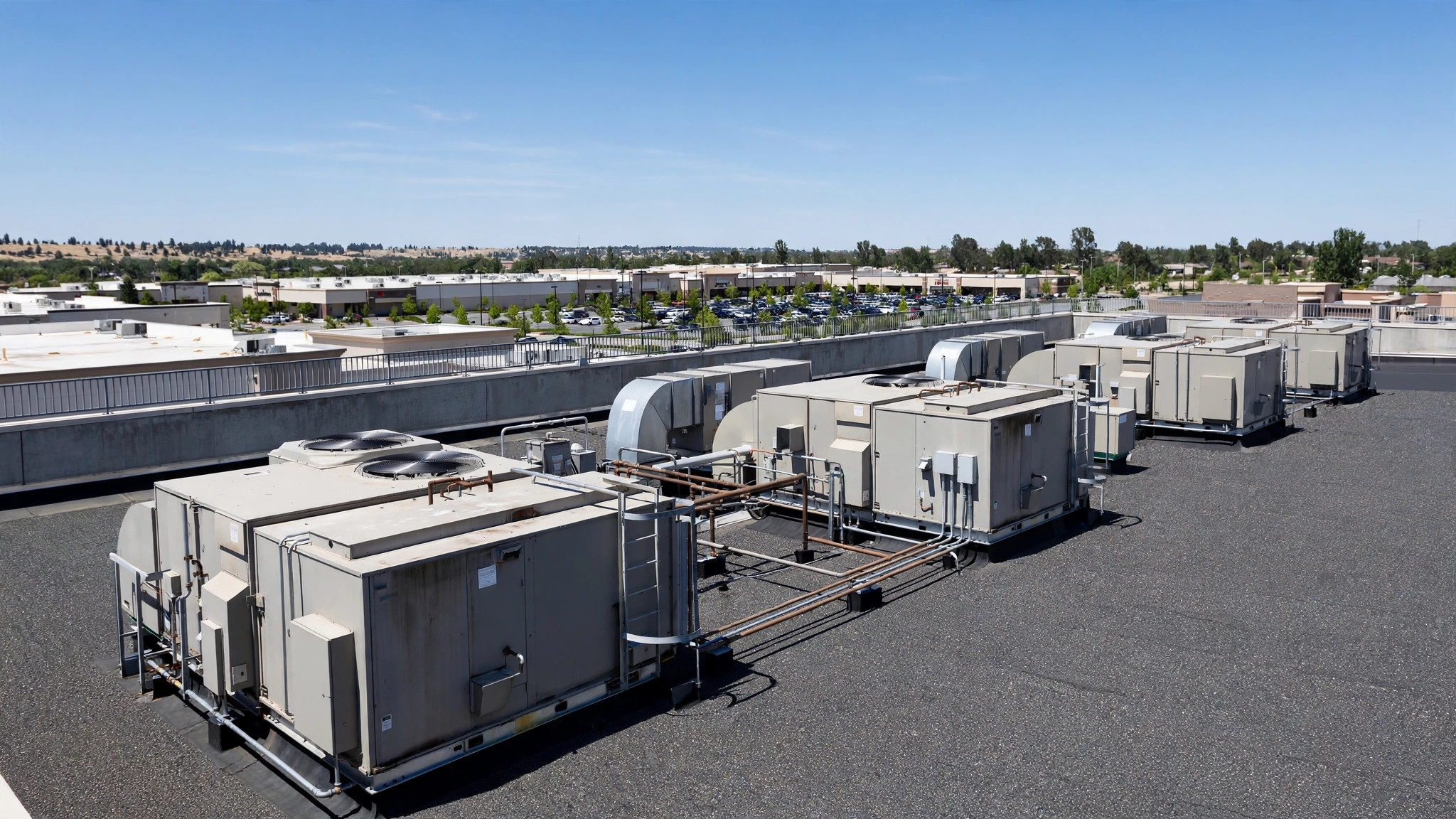
Heating, cooling, and ventilation keep a commercial building alive. When they fail, tenants complain, equipment suffers, and energy bills spike. Good commercial hvac services cover the whole life of your system, from design and install to maintenance, repair, and eventual replacement. This guide explains the twelve services that matter, what fair pricing looks like, and how to hire a firm you can trust.
Many owners only call for repairs. That is the most expensive way to manage HVAC. Full commercial hvac services include preventive care that stops breakdowns, energy audits that cut waste, and planned replacement that avoids emergencies. Learn the menu below. Use all of it.
What commercial hvac services Include
Twelve services cover nearly every building need.
- System design and load calculation. Proper sizing for new builds and major renovations. The foundation of efficiency.
- Equipment installation. Rooftop units, splits, chillers, boilers, and controls installed to spec and code.
- Preventive maintenance. Scheduled visits covering filters, coils, refrigerant, electrical, and controls.
- Repair and troubleshooting. Diagnosis and fixes for breakdowns, from capacitors to compressors.
- Emergency service. After-hours response for failures that threaten operations or safety.
- Ductwork services. Installation, sealing, cleaning, and repair of distribution ductwork.
- Controls and building automation. Thermostats, sensors, and building management systems that run it all.
- Indoor air quality services. Ventilation checks, filtration upgrades, and humidity control.
- Refrigerant management. Leak detection, recovery, and charging to legal and efficient spec.
- Energy audits and retrofits. Measuring waste and upgrading equipment or controls to cut it.
- System replacement and retrofit planning. Lifecycle analysis and phased upgrades for aging equipment.
- Commissioning and testing. Verifying new or modified systems perform to design before sign-off.
- Licensed HVAC contractor with commercial experience, verified by phone.
- Technicians certified for your refrigerant types and equipment brands.
- Written scopes with parts, labor, and timelines on every job.
- Maintenance reports with photos and measurements after each visit.
- Clear warranty terms on parts and labor, in writing.
- Emergency response plan with stated rates and response times.
- Local references from buildings like yours that you can call.
Not every firm offers all twelve. Full-service commercial hvac services providers do. Ask any firm which of these they perform in-house and which they subcontract. The answer tells you their real depth.
Repair Versus Maintenance Versus Replacement
Owners confuse these three. Repairs fix what broke. Maintenance prevents breakage. Replacement ends the cycle when equipment is done. Good commercial hvac services keep all three in balance.
A firm that only repairs profits from your breakdowns. A firm with a real maintenance program profits from your uptime. Ask prospective firms how they handle the repair-replace decision. Honest shops use the half-rule: if a repair costs more than half of replacement on old equipment, they recommend replacement. They show you the numbers both ways.
What commercial hvac services Cost
Ranges help you judge quotes. Maintenance visits run 200 to 400 dollars per rooftop unit. Repair calls run 200 to 600 dollars for minor parts, 600 to 1,500 for mid-range work, and 1,500 to 4,000 or more for major components. Emergency calls add 50 to 100 percent.
Installations vary widely. A single rooftop unit replacement runs 5,000 to 12,000 dollars depending on size and complexity. Full system replacements for large buildings run into six figures. Energy audits run 500 to 3,000 dollars. Get written scopes on everything. Compare line items, not totals.
The 7-Point Hiring Checklist
Use this before signing with any firm.
Interview the service manager, not just the salesperson. Ask how they train techs. Ask how they handle callbacks. Ask what happens when a repair fails under warranty. Straight answers signal a straight firm. The [Air Conditioning Contractors of America](https://www.acca.org/) and [ASHRAE](https://www.ashrae.org/) both publish standards and owner resources worth reading.
Service Agreements: What to Demand
A service agreement is the heart of commercial hvac services. Demand a written task list per visit. Demand visit reports with measurements. Demand a clear list of included versus billable work. Demand priority emergency response terms.
Watch the contract terms. Avoid long auto-renewals with stiff exit penalties. One-year terms with clear renewal language are fair. Ask what happens if service quality slips. The agreement should let you exit for cause. Read every page. Ask about each clause you do not understand.
Also confirm what “included parts” really means. Some plans cover only minor parts like belts and filters. Others cover contactors and capacitors too. Know the cap. A plan with a clear parts allowance and a clear overage rate leaves no surprises. Vague parts language leads to billing fights. Get specifics in writing before the first visit.
Energy Efficiency and Your Bottom Line
HVAC is usually the largest energy cost in a commercial building. Good commercial hvac services attack that cost directly. Clean coils, correct refrigerant charge, sealed ducts, and calibrated controls can cut HVAC energy use by 10 to 20 percent.
Ask your firm for an energy baseline. Then track it. Quarterly reviews of energy use per square foot reveal drift early. [ENERGY STAR](https://www.energystar.gov/) offers benchmarking tools for commercial buildings. Firms that talk energy, not just repairs, are the ones worth keeping.
Simple no-cost steps help too. Reset thermostats to sensible setpoints. Use scheduling so empty zones are not conditioned all night. Close outside air dampers to minimum during unoccupied hours. These control tweaks cost nothing and often save five to ten percent on their own. Your service firm should review settings at every visit. If they never touch the controls, ask why.
Indoor Air Quality Matters Too
Tenants notice air. Poor ventilation causes complaints, absenteeism, and in bad cases, health issues. Commercial hvac services should include ventilation checks and filtration review. Ask about filter ratings. Ask about outside air volumes. Ask about humidity control in summer and winter.
Upgrades like better filtration and demand-controlled ventilation pay back in tenant satisfaction and sometimes in energy savings. They also support any green building goals the property holds. Put air quality on the annual review agenda with your HVAC firm.
Planning for Replacement
Equipment ages out. Rooftop units last 15 to 20 years with care. Plan replacement before failure forces it. Ask your commercial hvac services firm for a lifecycle report on each major unit. Age, condition, repair history, efficiency.
Budget ahead. Phased replacement spreads cost across years. Emergency replacement concentrates it in the worst week of summer at premium rates. Owners who plan pay less and choose better equipment. Start the conversation when units pass year twelve, not year eighteen.
Retrofit and Upgrade Options
Full replacement is not the only path. Smart commercial hvac services include targeted upgrades. Variable-speed drives on fans and pumps cut energy use sharply. They let motors match the real load instead of running full tilt. Most buildings see payback in a few years.
Control upgrades pay too. Old pneumatic controls drift and waste energy. Modern digital controls with proper scheduling and setbacks tighten operation. Demand-controlled ventilation adjusts outside air to actual occupancy. Heat recovery captures waste heat from exhaust air. Ask your firm to model the savings for each option. Stack the upgrades with the best payback first. Fund the rest from the savings.
Related Reading
For AC-specific repairs, see [commercial ac repair](/commercial-ac-repair/). For repair detail, read [commercial hvac repair](/commercial-hvac-repair/). For maintenance programs, see [commercial ac maintenance](/commercial-ac-maintenance/) when it publishes.
FAQ
What do commercial hvac services typically include?
Installation, preventive maintenance, repair, emergency service, ductwork, controls, air quality, refrigerant management, energy audits, replacement planning, and commissioning. Full-service firms cover all twelve.
How much does a commercial HVAC service agreement cost?
Roughly 200 to 400 dollars per rooftop unit per visit, with two to four visits a year. Multi-unit buildings get discounts. Plans with parts included cost more but cap surprise bills.
How do I know if I need repair or replacement?
Use the half-rule on older equipment. If the repair exceeds half the replacement cost and the unit is past 12 to 15 years, replacement usually wins. Ask for both options in writing with expected life.
Should one firm handle all my commercial hvac services?
Usually yes. One accountable firm knows your whole system. They spot patterns across visits. Splitting work across firms fragments the history and blurs responsibility.
How fast is emergency commercial HVAC response?
Good firms promise stated response times, often two to four hours for agreement customers. Get the commitment in writing. After-hours rates add 50 to 100 percent to normal pricing.
Next Steps
List your HVAC equipment this week with ages and service history. Call three licensed commercial firms and ask for written proposals covering maintenance and emergency terms. Compare their task lists against the twelve services above. Choose the firm with depth, not just the low bid. Complete commercial hvac services turn climate control from a gamble into a managed asset. Start building that program now. Ask each bidder for two references from buildings like yours. A quick call tells you more than any brochure.



