
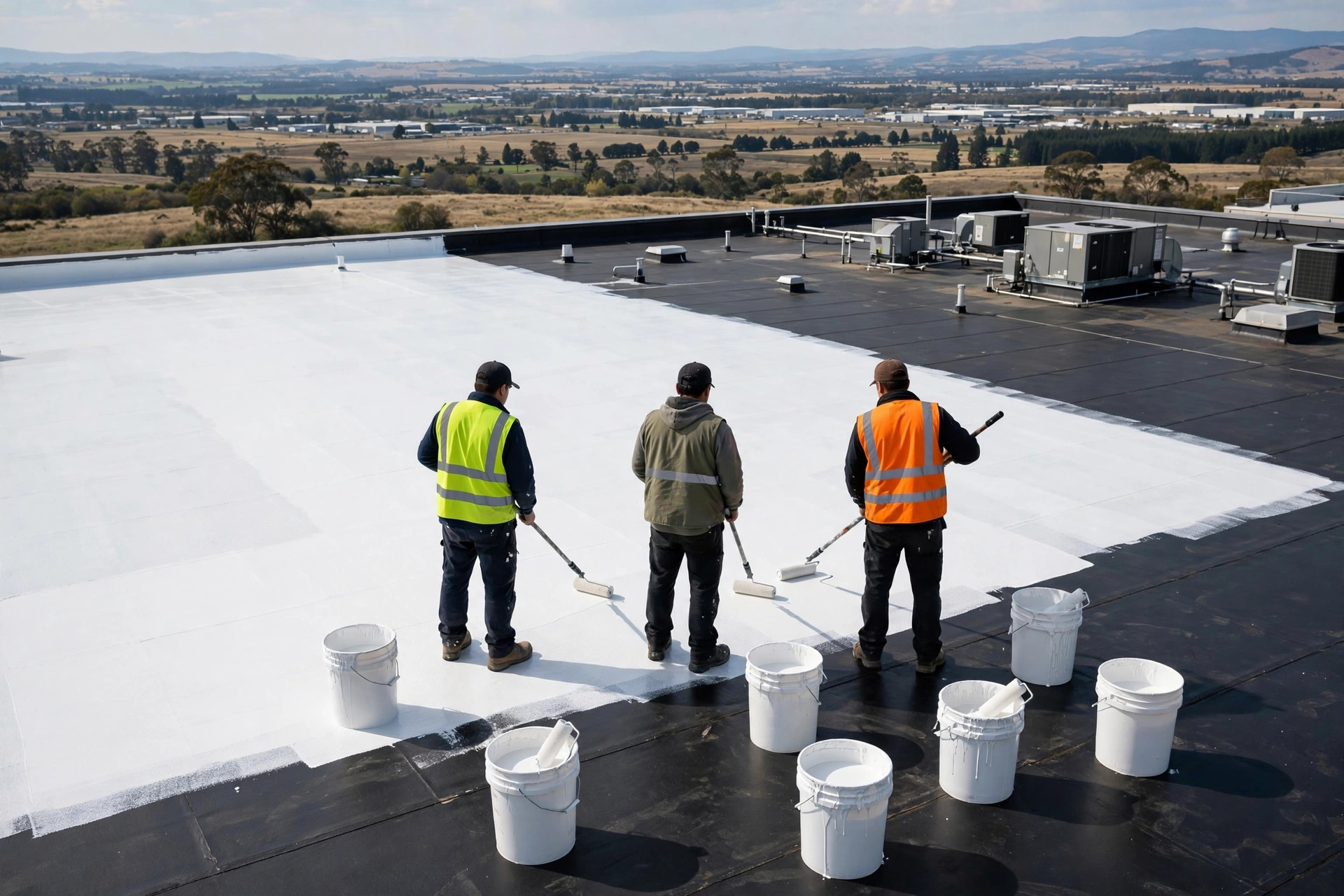
Commercial roof restoration is the process of renewing an aging but sound roof with coatings and repairs instead of tearing it off and starting over. For many building owners, it is the smart middle path between constant patching and a full replacement. A restoration adds years of service life, improves energy performance, and costs far less than a new roof.
The idea is simple. If the roof deck and insulation are still in good shape, there is no need to throw them away. A commercial roof restoration fixes the weak spots, seals the surface, and applies a reflective coating system that protects the roof for another decade or more. This guide explains the five main benefits, the step-by-step process, the cost factors, and how to know whether a building is a good candidate.
Benefit 1: Commercial Roof Restoration Costs Far Less Than Replacement
The strongest reason owners choose commercial roof restoration is price. A restoration typically costs a fraction of a full tear-off and replacement. There is no disposal bill for tons of old roofing, no new insulation to buy, and far less labor.
Savings of half or more compared with replacement are common. For a large warehouse or shopping center, that difference can mean tens of thousands of dollars staying in the budget. The money saved can go to other building needs or to the next round of maintenance. When the roof is structurally sound, paying full replacement price makes little sense.
Benefit 2: Commercial Roof Restoration Extends Roof Life by Years
A quality restoration system adds ten to fifteen years of service life to a roof that still has a sound base. The coating seals small cracks, protects the membrane from UV damage, and sheds water effectively.
This matters because UV light is the slow killer of most roof membranes. The reflective coating blocks the rays that dry out and crack the surface below. Combined with repairs to seams and flashing, the system gives the owner a roof that behaves much younger than its age. For more on keeping roofs in shape, see commercial roofing maintenance.
Benefit 3: Lower Energy Bills After Commercial Roof Restoration
Most restoration coatings are bright white and highly reflective. They bounce solar heat away instead of soaking it in. On a hot day, a coated roof can run far cooler than a dark, worn membrane.
Cooler roofs mean the air conditioning works less. Owners often see a real drop in summer cooling costs after a commercial roof restoration. The US Department of Energy supports cool roof strategies for cutting building energy use, with guidance available at energy.gov. In warm climates, the energy savings alone can pay back a good share of the project cost.
Benefit 4: Less Disruption Than a Full Roof Replacement
A tear-off replacement is loud, messy, and slow. It can disrupt tenants and customers for weeks. Commercial roof restoration is far gentler. There is no ripping up of old material, no dumpsters full of debris, and much less noise.
Most buildings stay fully open during the work. Crews clean and repair the surface, then spray or roll the coating in sections. The smell from some coatings is mild and fades quickly. For occupied offices, stores, and schools, this low-disruption factor is a major selling point.
Benefit 5: Commercial Roof Restoration Is the Greener Choice
Keeping the existing roof out of the landfill is a real environmental win. Roof tear-offs generate huge amounts of waste. A restoration avoids nearly all of it.
The reflective coating also cuts the building’s carbon footprint by lowering cooling energy. Many owners pursuing green building goals count a commercial roof restoration toward their targets. It is one of the rare projects that saves money and helps the environment at the same time.
The Commercial Roof Restoration Process Step by Step
Knowing the process helps owners judge bids and watch the work. A proper commercial roof restoration follows these stages.
Inspection and testing. The contractor walks the roof, checks every seam and penetration, and tests the insulation for trapped moisture. Wet areas get marked for repair or replacement. A roof with widespread wet insulation is not a good candidate.
Cleaning. The surface gets pressure washed to remove dirt, loose material, and old failed coating. Coatings bond poorly to dirty surfaces, so this step decides how long the system lasts.
Repairs. All seams get resealed, flashing gets fixed, and damaged spots get patched. Drains get cleared. This repair stage is what separates a real restoration from a quick paint job.
Priming. Many systems need a primer to bond the coating to the old surface. The primer type depends on the existing roof material.
Coating application. The crew applies the coating, usually in two passes, to reach the specified thickness. Silicone, acrylic, and urethane are the common choices, each with different strengths.
Final walk and warranty. The contractor checks thickness, details, and coverage, then issues the warranty paperwork. Keep these documents with the building records.
Is Your Building a Candidate for Commercial Roof Restoration?
Not every roof qualifies. Use this checklist.
- The deck is solid with no major structural issues.
- Wet insulation covers only a small share of the roof area.
- The existing membrane is mostly intact, not crumbling.
- Drainage works or can be fixed as part of the job.
- The building will be kept for at least another ten years.
If the roof fails several of these checks, replacement may be the honest answer. A good contractor will say so. For a related option on metal roofs, see commercial metal roof restoration.
Commercial Roof Restoration Cost Factors
Use this checklist to understand pricing.
- Roof size. Larger roofs cost less per square foot, but the total is higher.
- Amount of repair work. Heavy seam repair and wet insulation replacement add labor before coating starts.
- Coating type. Silicone handles ponding water best and costs more. Acrylic is cheaper but weaker in standing water.
- Number of coats and thickness. Thicker systems last longer and cost more.
- Roof complexity. Many penetrations, walls, and odd shapes slow the crew.
- Access and staging. Hard-to-reach roofs add setup cost.
The National Roofing Contractors Association offers owner resources on coating systems and contractor selection at NRCA.
Comparing Commercial Roof Restoration Quotes
When bids come in, compare them on equal terms. A useful quote for commercial roof restoration names the coating brand and type, the total thickness in dry mils, the primer, and the repair scope. It should state the warranty length and what the warranty covers. It should also list the schedule and how the crew will protect the building during the work.
Watch for bids that skip the repair stage or name no coating thickness. A thin single coat over a dirty roof is not a restoration. It is paint. Ask each bidder how they test for wet insulation and what they do when they find it. The answers reveal who plans to do the job right. Two or three detailed quotes make the fair price clear and protect the owner from both overpaying and underbuying.
Commercial Roof Restoration FAQs
How long does a commercial roof restoration last?
A quality system typically adds ten to fifteen years of service life. The coating type, the thickness applied, and the amount of ponding water all affect the result. Regular checks and small touch-ups keep it at its best.
Can commercial roof restoration be done over any roof type?
It works over most single-ply membranes, modified bitumen, built-up roofs, metal, and spray foam. Each surface needs the right primer and coating chemistry. The contractor should confirm compatibility before quoting.
How disruptive is a commercial roof restoration?
Much less than a replacement. There is no tear-off, less noise, and no heavy debris. Most buildings stay open with normal operations. Crews work in sections so only part of the roof is active at a time.
Does a restored roof qualify for a warranty?
Yes. Coating makers offer warranties from ten years up, depending on the system thickness. Read the terms to see what maintenance is required to keep the warranty valid.
When is restoration the wrong choice?
When the deck is damaged, wet insulation is widespread, or the membrane is too far gone to save. In those cases, coating over the damage hides problems instead of fixing them. An honest inspection will show which path fits.
Next Steps for Building Owners
Commercial roof restoration is worth a serious look for any aging roof with a sound base. Get a professional inspection with moisture testing, collect detailed bids from experienced contractors, and compare the restoration price against replacement. For the right building, it delivers years of protection at a fraction of the cost. Start with the inspection, choose the contractor with care, and the restored roof will serve the building well for a long time to come. A little homework now prevents big regrets later, and the savings speak for themselves.



